The 15-Minute Daily Typing Warm-Up Used by Grandmaster Racers
Stop jumping straight into cold sprint tests. Follow this 4-phase 15-minute daily warmup—mobility, weak-key calibration, over-speed bursts, and ranked duels.
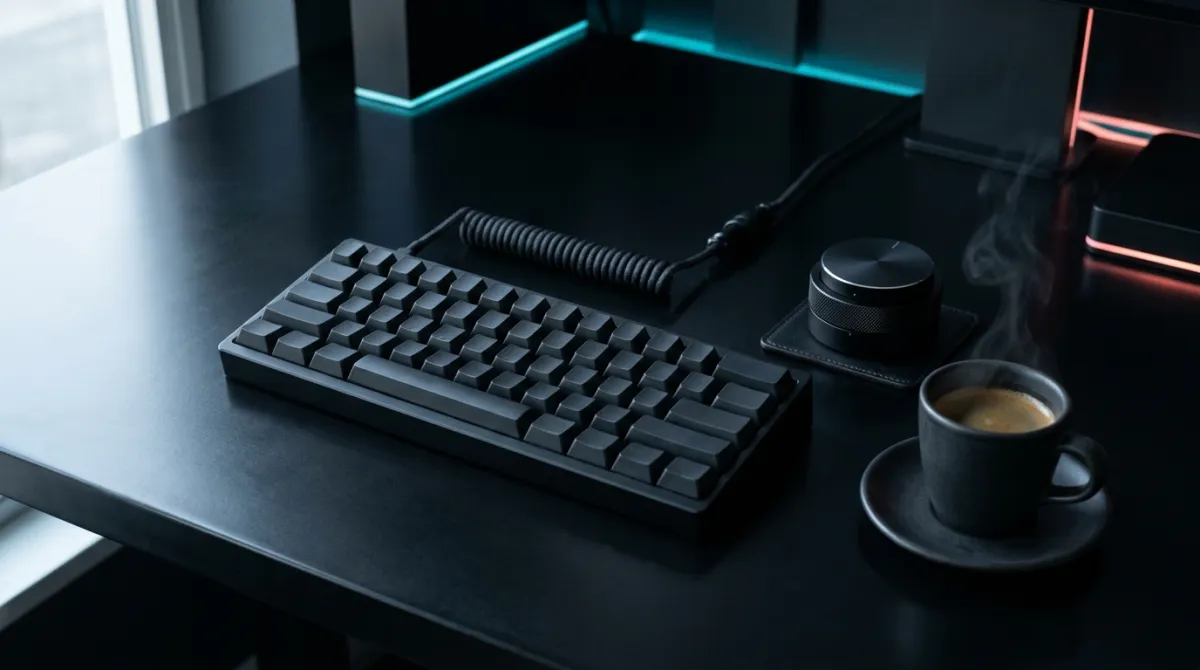
Watch how top competitive racers open a session versus how casual typists open a session. Casual typists open a browser tab, slam straight into a 60-second sprint with cold hands, botch three words in the first ten seconds, hit reset in frustration, and spend twenty minutes chasing one lucky run.
Grandmaster typists treat the keyboard like an instrument. Just five to fifteen structured minutes of sequential warm-up locks in finger circulation, calibrates key travel, wakes up visual look-ahead buffering, and puts your hands in peak rhythm before your ELO or score is on the line.
Why Cold Sprinting Backfires
When your hands are cold—first thing in the morning or after hours away from a desk—two predictable things happen:
- Higher inter-finger stiffness: Lateral ring-to-pinky stretches (
P,Q,Z,/,;) lag 25–40 milliseconds behind your index fingers, causing subtle out-of-order letter transpositions ("hte"instead of"the"). - Desynced eye–hand buffering: Your eyes jump ahead before your fingers have synchronized key-switch feel, leading to sloppy early misses that trigger nervous over-correction for the rest of the session.
A clean 15-minute, 4-phase routine eliminates both issues automatically.
The 15-Minute Grandmaster Warm-Up Blueprint
| Phase | Time Window | Focus & Pace | Target Accuracy | Tool / Mode |
|---|---|---|---|---|
| 1. Circulation & Anchor | 0:00 – 2:30 | Gentle finger stretch + slow home-row rhythm | 99%+ | Unhurried prose warmup |
| 2. Weak-Key Calibration | 2:30 – 6:30 | Isolate slowest bigrams & pinky reaches | 98%+ | Weak-key drills |
| 3. Over-Speed Rhythm Priming | 6:30 – 10:00 | Short 20–30s high-cadence pushes + look-ahead | 95–96% | Fast burst runs |
| 4. Live Ranked Execution | 10:00 – 15:00 | Full-passage composure & zero restarts | 97%+ | Ranked 1v1 duels |

Phase 1 (Minutes 0:00–2:30): Hand Mobility & Quiet Anchors
Start off the keyboard for 30 seconds: shake both hands loosely at your sides, gently open and close your fingers five times, and roll your shoulders back into neutral posture. Never force painful wrist bends.
Rest lightly on F and J and type two minutes at roughly 75% of your normal pace. Focus purely on:
- Minimal finger lift (2–3 mm above caps)
- Silent, feather-light bottom-outs
- Crisp opposite-hand
Shifttiming
Phase 2 (Minutes 2:30–6:30): Surgical Weak-Key Calibration
Now that fingers feel supple, attack friction directly inside targeted weak-key drills. Four minutes targeting your bottom five characters or tricky same-finger bigrams (de, ed, ce, br, lo, qu) clears the exact stumbles that derail full paragraphs later.
Hold 98%+ accuracy here—think smoothness, not rush.
Phase 3 (Minutes 6:30–10:00): Over-Speed Priming
With mechanics calibrated, wake up fast motor chunking. Run three crisp 20-to-30-second bursts at roughly 105–110% of your comfortable cruising speed—pushing your visual gaze two words ahead of your fingers so your brain stops micro-managing individual characters.
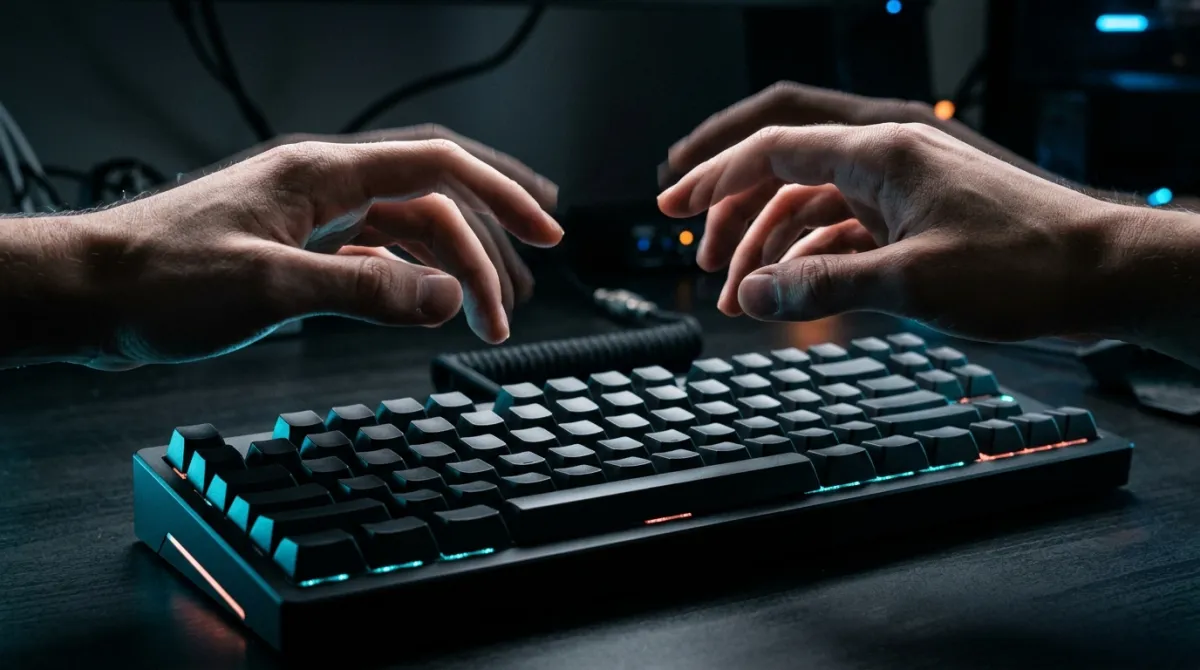
Take 15 seconds of stillness between bursts. If accuracy drops under 94%, ease off 5% on the third rep so you reinforce clean speed rather than sloppy noise.
Phase 4 (Minutes 10:00–15:00): Two Live Ranked Duels
Finish with two or three full ranked 1v1 typing duels. Because your hands are warm, your weak keys are primed, and your look-ahead buffer is already wide open, you step into match one playing at your true ceiling—learning calm composure and mistake recovery against a matched opponent.
When the 15 minutes end, glance at your weekly trend inside training stats and walk away sharp instead of grinding into forearm fatigue.
Why Most Typists Lose Speed Gains Between Sessions
Even disciplined learners often spin their wheels if they treat every practice session as an unstructured test marathon. Motor-learning research consistently shows that varied, structured short blocks outperform endless identical 60-second retries for two reasons:
- Attention decay after 20 minutes: Past the 15-to-20-minute mark, cognitive fatigue erodes visual look-ahead distance. You begin reacting letter by letter again, practicing sloppy habits rather than clean motor chunks.
- Cold-to-hot transition gap: Jumping straight to top speed forces your fingers into high-error defense mode. Warming up progressively raises joint lubrication and tactile sensitivity so Phase 3 sprints wire clean acceleration paths.
Adapting the Routine for Exams, Coding, or Busy Mornings
Short on time before work, heading into a coding interview, or sitting down for an official civil-service typing test? Run the 6-Minute Express Warm-Up:
- 2 minutes: Calm 75% accuracy pacing (Phase 1) focusing on relaxed shoulders and floating wrists.
- 3 minutes: Weak-key and punctuation drills inside adaptive drills to wake up numbers, commas, and shifted capitals.
- 1 minute: One smooth 98%-accuracy test passage to lock in confidence without burning focus before the main event.
If you are training specifically for coding sprints or heavy technical writing, swap Phase 2 once or twice a week for five minutes of symbol drills ({}, [], =>, _, ;) so your outer-right pinky joins the warmup cleanly.
Tracking Whether Your Warm-Up Is Actually Working
Do not judge progress by single lucky personal bests—judge it by your 7-day rolling median. Inside training stats, watch three indicators at the end of each week:
- Cold-start floor rising: Your very first Phase 1 or Phase 2 run of the day creeps upward from 62 WPM to 72 WPM.
- Error variance shrinking: Your accuracy stays consistently between 97% and 98.5% even on unfamiliar punctuation-heavy prompts.
- Ranked race composure: Your ELO rating climbs steadily because mid-race recovery stays calm after isolated slips.
Start Today's 15-Minute Block
Remember why warm-ups work: your nervous system locks in high-speed patterns during rest and sleep, not from exhausted overtime reps. Treat each 15-minute block as crisp calibration—clean posture, deliberate weak-key smoothing, short over-speed bursts, and two focused duels.
Consistency beats marathon sessions every week of the year. Open weak-key drills for four minutes right now, check your progression curve in training stats, and carry warm, dialed-in hands straight into a ranked 1v1 duel.
Frequently asked questions
Why do I type 10–15 WPM slower during my first two minutes of the day?
Is 15 minutes per day really enough to keep improving past 100 WPM?
What should I do if my accuracy crashes during Phase 3 speed bursts?
Can I use this 15-minute routine before an official typing exam or coding interview?
Should I practice on the same text every day or rotate prompts?
Continue reading
All posts
Free Touch Typing Course Online: Master the Home Row Without Looking Down
Stop looking at your keyboard in 10–15 minutes a day. Learn exact home-row anchors, 10-finger key zones, tactile bump orientation, and progressive beginner lessons.
5 min
7 Science-Backed Habits of 150+ WPM Typists
Elite typists do not move their fingers three times faster—they buffer words ahead, fire motor chunks, protect 98% accuracy, and train weak keys under ranked pressure.
6 min

Best Monkeytype, TypeRacer & 10FastFingers Alternative for Ranked 1v1 Duels
Compare Monkeytype, TypeRacer, 10FastFingers, and WPM Duel side by side across ELO matchmaking, anti-cheat telemetry, structured lessons, and official exam modes.
5 min